About
A consulting practice built around clarity.
OPE Beratung GmbH is an IT consulting company. Its work concerns the systems organisations rely on and the decisions that shape them — described honestly, planned carefully, and delivered in a form that others can maintain.

The company operates as an independent technology consultancy. It is not tied to a single vendor, platform or product, and its recommendations are not shaped by what would be convenient to resell.
Engagements are expected to range from focused technical assessments to longer advisory relationships that run alongside a delivery programme. The service areas published on this website are proposed descriptions and are confirmed with the company owner before any engagement is agreed.
No claims are made here about team size, history, awards, certifications, partnerships or client relationships. Anything of that kind would be stated only once it could be substantiated.
Advice should be useful the week after it is given.
A great deal of technology advice is difficult to act on: too abstract to schedule, too general to argue with, too optimistic to plan against. The philosophy here is the opposite — specific enough to be wrong, and therefore specific enough to be checked.
That means naming systems rather than categories, describing sequences rather than aspirations, and separating what is known from what is assumed. Where an assumption is load-bearing, it is flagged as such.
It also means accepting that the organisation, not the consultant, owns the outcome. The purpose of the work is to improve the quality of decisions made inside the business, not to create a dependency outside it.
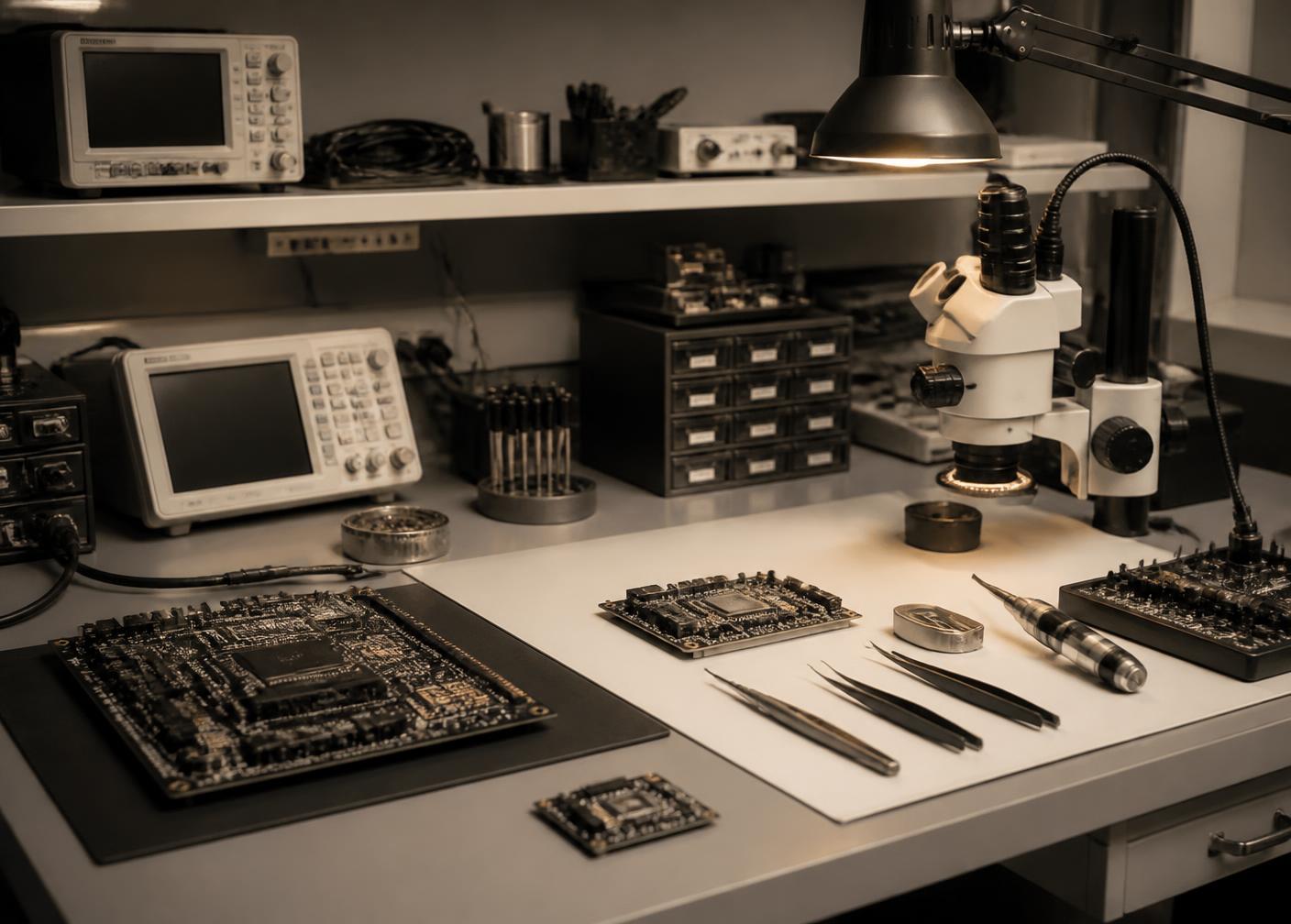
From symptom to structure.
Problems usually arrive described by their symptoms: a release that keeps slipping, a report nobody trusts, a service that fails on Mondays. The first task is to separate the symptom from the structure producing it.
That work is unglamorous — reading code and configuration, tracing data through systems, asking the people who operate them what actually happens rather than what is supposed to happen.
Once the structure is understood, options can be framed honestly: what a minimal fix would achieve, what a deeper change would cost, and what happens if nothing is done at all. The last option is always included, because it is always available.
Recommendations then carry their reasoning with them, so that they can be re-evaluated later when circumstances change.
Six principles that shape day-to-day work.
01
Describe before prescribing
A recommendation is only as good as the description of the situation it responds to.
02
Prefer the reversible option
Where two paths are comparable, the one that is easier to undo is usually the better first move.
03
Write things down
Decisions, assumptions and open questions are recorded so the reasoning outlives the conversation.
04
Name the trade-off
Every technical choice costs something. Saying what it costs is part of the advice.
05
Respect the existing system
Working software carries knowledge. It is examined before it is replaced.
06
Leave the team stronger
Work is done in a way that internal teams can continue without external dependence.

Written first, discussed second.
Complex technical positions are easier to examine on paper than in a meeting. Findings, options and recommendations are therefore written up before they are discussed, so that everyone reacts to the same text.
Communication is adjusted to the audience without being diluted: an engineering team and a managing director need different levels of detail, but they should not be given different conclusions.
Where something is uncertain, it is described as uncertain. Confidence is reported at the level it is actually held.
The second year matters more than the first release.
Quality is treated as a property of how a system behaves under change: whether a modification can be made safely, whether a failure can be diagnosed, whether a new engineer can find their way in without a guide.
Practically, that favours conventional structures over clever ones, tests that describe behaviour, dependencies chosen for their maintenance record, and documentation kept close to the code it describes.
Contact: carriekennedy198961@gmail.com · opeberatung.com